Seal integrity is the first line of defence for any packaged product. Package seal integrity testing now pairs two complementary methods: the classic underwater bubble test, which locates leaks visually under vacuum, and the vacuum decay method, which quantifies leakage from the pressure rise in an evacuated chamber. Modern practice spans flexible pouches, semi-rigid trays and rigid packs, with vacuum decay recognised in ASTM F2338 and recommended in USP <1207> for non-destructive container-closure testing.
1. Why the old bubble-only workflow needed revision
Bubble tests are intuitive but subjective: results depend on the operator’s eyes, and micro-leaks simply do not produce visible bubbles. Over three decades, blister packs, trays and rigid containers entered everyday QC, while pharmaceutical and electronics manufacturers began demanding quantitative, traceable leak data instead of pass/fail observations. That gap drove the shift from a flexible-pouch-only, dye-and-bubble standard to a two-method framework that adds an instrument-based, quantitative vacuum decay procedure for non-destructive micro-leak detection.
2. The two methods at a glance
| Aspect | Underwater bubble method | Vacuum decay method |
|---|---|---|
| Principle | Pressure difference underwater; escaping gas or ingressed water reveals a leak | Pressure rise in an evacuated chamber is tracked by a sensor |
| Result | Qualitative / semi-quantitative, shows leak location | Quantitative leak rate and leak-channel size |
| Sample contact | Water immersion | Dry, fully non-destructive |
| Speed and skill | Simple setup, operator judgement | Instrument judgement, traceable data |
| Best for | Routine batch screening, locating the leak point | Micro-leak monitoring, pharmaceutical and electronics packs |
3. Underwater bubble method: locating the leak
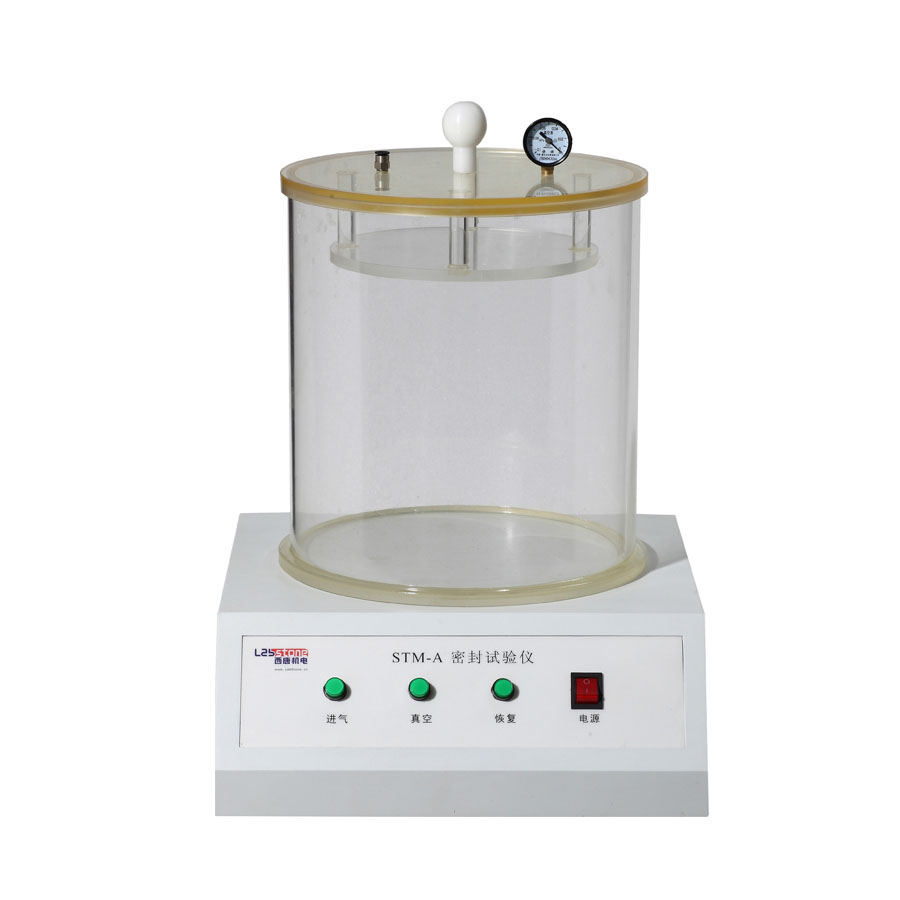
The sample is immersed in water inside a vacuum chamber. Evacuation creates a pressure difference across the package wall: air inside a leaking pack escapes as a continuous stream of bubbles, and after the hold period the pack is opened to check for water ingress. A pack is judged leak-tight only when no continuous bubbles appear during evacuation and holding and no water has entered; isolated bubbles are normally residual dissolved gas released from the water and must not be scored as leaks.
Instrument requirements are concrete: the vacuum source must reach a maximum vacuum of at least 95 kPa within 30 to 60 seconds, the vacuum gauge must be accuracy class 1 or better, and the chamber must withstand 100 kPa. A transparent perforated plate mounted on the sealed lid holds the sample evenly submerged so bubbles stay visible. Running a blank test first, with no sample in the water, clears dissolved-gas bubbles that would otherwise confound the observation.
The method’s strengths are simplicity, intuitive results and exact leak location, which makes it ideal for routine batch screening of plastic film pouches and aluminium-plastic laminate bags where water will not attack the outer layer. Its limits are equally clear: it is qualitative or semi-quantitative at best, sensitive to operator skill, blind to micro-leaks below visual threshold, and unsuitable for water-sensitive packs.
4. Vacuum decay: quantitative micro-leak testing
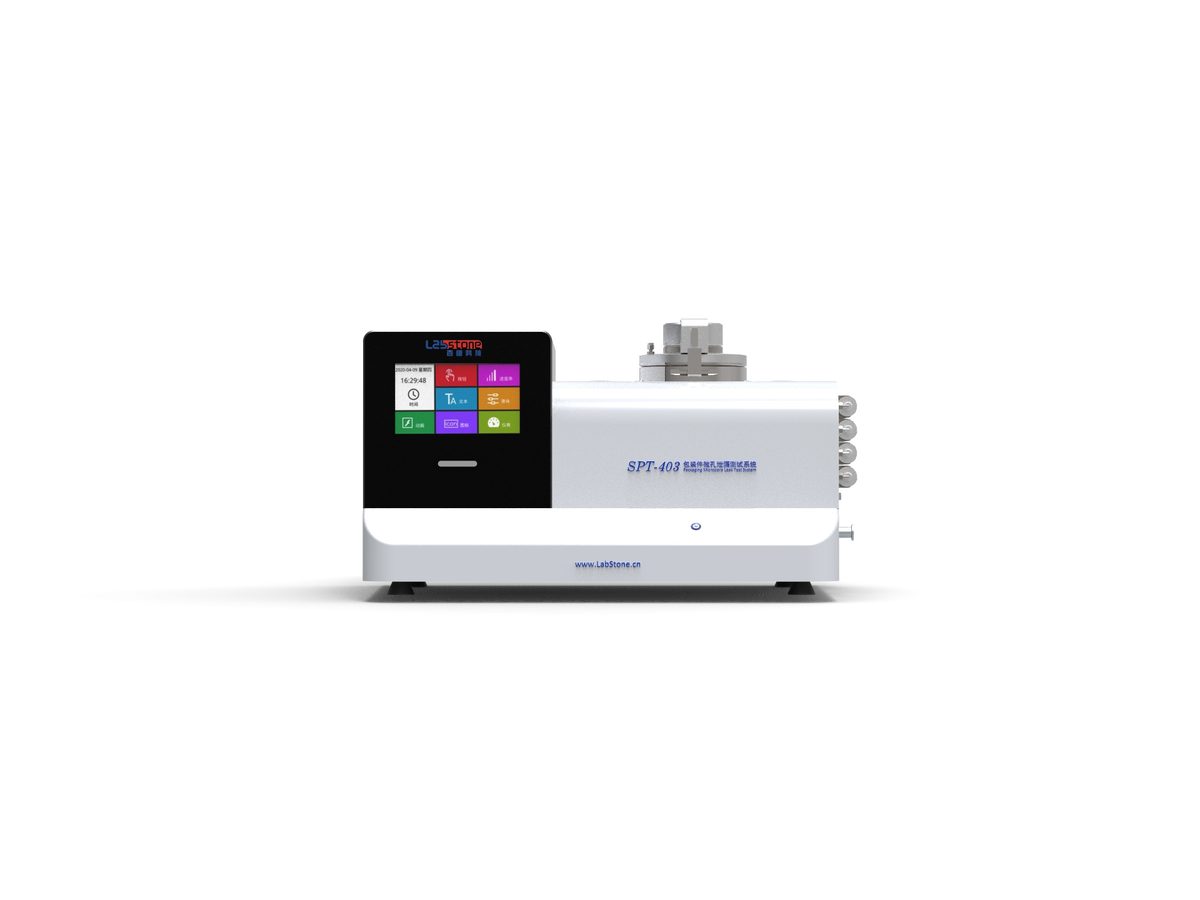
The package is placed in a sealed test chamber that is evacuated to a target vacuum; a high-resolution pressure sensor then tracks how fast the vacuum decays. The vacuum decay rate Q=(P1-P2)/T, expressed in Pa/s, characterises the leak, and comparison against a reference allows the instrument to compute a leak rate and an equivalent leak-channel size. Flexible-pack chambers add a gas-permeable layer so air drawn through the leak reaches the sensor. The test is dry, non-destructive and fully instrument-judged.
This is the same physics as the vacuum decay method of ASTM F2338, which USP <1207> lists among the recommended deterministic methods for container-closure integrity, and pharma QC labs increasingly specify it for finished-pack release. Because the chamber method is instrument-based, results are operator-independent and traceable, which suits micro-leak monitoring on pharmaceutical, sterile medical device and precision electronics packaging where a visible bubble would never appear.
5. Choosing between the two methods
Choose by purpose. For routine batch screening and pinpointing where a pack leaks, the underwater bubble method remains the fastest and cheapest answer. For quantitative release data, micro-leak monitoring, or packs that must not touch water, vacuum decay is the right tool. Note one exclusion: neither method suits packages packed under vacuum, which show no pressure difference under evacuation; such samples need internal pressurisation instead, following the bubble-emission-under-pressure approach of ASTM F2096.
6. Configuring the lab
As standards converge on the two-method model, the safest lab configuration covers both. LabStone’s stm-ab leak tester runs the underwater bubble method in a 0 to −90 kPa vacuum vessel and adds a positive-pressure mode for seal strength and burst testing. The spt-401 packaging integrity tester applies the vacuum decay method, reporting leak rates and equivalent leak-channel sizes from 0.5 to 50 µm in line with ASTM F2338. Together they span routine screening and quantitative micro-leak control.
References
- ASTM F2338, Standard Test Method for Nondestructive Detection of Leaks in Packages by Vacuum Decay Method
- ASTM D3078, Standard Test Method for Determination of Voids in Flexible Packaging by Bubble Emission
- ASTM F2096, Standard Test Method for Nondestructive Detection of Leaks in Packaging by Internal Pressurization (Bubble Test)
- USP <1207>, Package Integrity Evaluation—Leak Test Technologies (vacuum decay among recommended deterministic methods)
- ASTM F88/F88M, Seal Strength of Flexible Barrier Materials (complementary seal-strength testing)
- ASTM D3078 scope note: not applicable to packages packed under vacuum