A plastic lunch box, the inner coating of chocolate foil, a silicone straw in a baby bottle — whenever they hold food, they may "move" their own chemicals into it. Regulation asks just two questions: how much moved? and what moved? These map to two tests: total migration and evaporation residue (non-volatile matter).
1. Total migration: how much is released
Total migration simulates contact between food and material, collects everything that can leach out, and measures the overall mass that migrates into the food simulant, usually expressed in mg/dm² or mg/kg. It does not identify individual substances; it only checks whether the total exceeds the limit.
2. Evaporation residue / non-volatile matter: what is left
Evaporation residue (non-volatile matter) is the mass of residue left after evaporating the solvent from the migration liquid. It reflects the heavier fractions that "won't boil or evaporate away", typically tested with aqueous, oily or alcoholic food simulants.
3. Why test both
Total migration guards the "total gate"; evaporation residue guards the "stubborn residue". They complement each other — one covers breadth, the other the persistent fractions. In the GB 4806 series and GB 31604.8, both are compliance thresholds for placing food-contact materials on the market.
4. How the gravimetric method performs the test
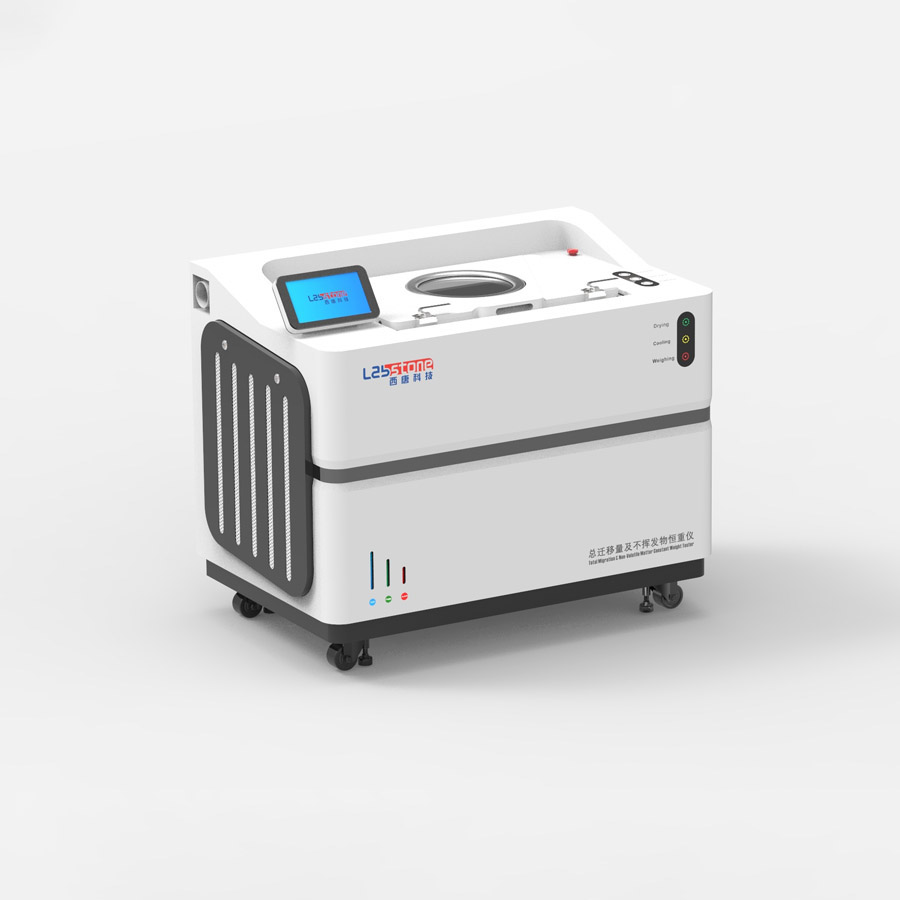
Both indicators are essentially "weighing": the migration liquid is evaporated in a water bath to near dryness, moved to an oven for constant weight, then weighed precisely. LabStone's total-migration / non-volatile-matter constant-weight tester automates the whole "water-bath evaporation — cooling — weighing — constant-weight decision" loop, freeing staff from long guarding and ensuring consistent 0.3 mg-level judgement.