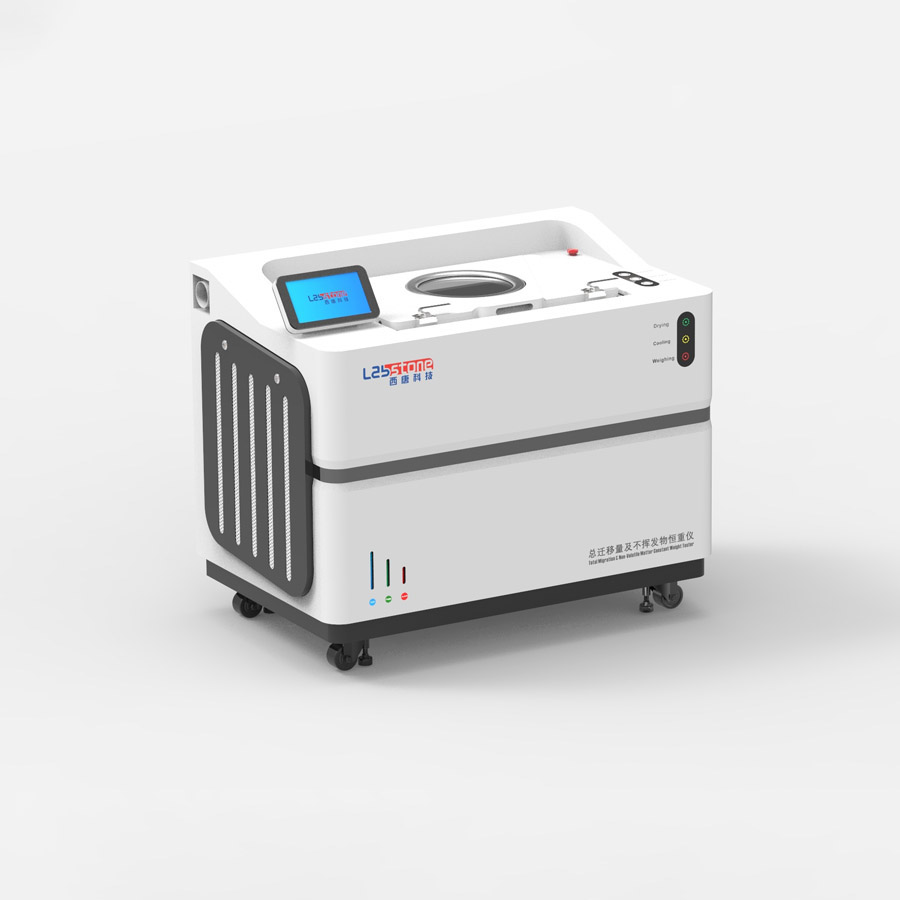
Non-volatile matter is the part that stays behind and will not fly away after evaporation. After you evaporate a liquid sample or run a migration test, the white or yellow residue left in the vessel is the non-volatile matter.
Think of boiling a spoon of salt water: the water escapes, the salt stays, that leftover salt is the non-volatile matter. In food-contact materials, this residue may come from plastic additives, so its amount is controlled.
Determination (total migration / evaporation residue)
1) Expose a food simulant to the sample (migration) or take the test solution. 2) Evaporate to near dryness in a water bath. 3) Dry to constant weight at 105 °C (ERT-C water-bath analyzer). 4) Weigh the residue and calculate non-volatile matter / total migration (mg/dm2 or mg/kg).
Relation to volatile matter
Non-volatile matter is what remains; volatile matter is what escapes; the two sum to the original sample (dry basis). Total migration reports the non-volatile matter, exactly how much residue the plastic and so on releases.