ASTM F88/F88M, 'Standard Test Method for Seal Strength of Flexible Barrier Materials', is the reference method for measuring the force needed to separate a heat seal in flexible packaging. A 25.4 mm (1.00 in) wide strip is cut perpendicular to the seal, clamped in a tensile tester with the seal line centred between the grips, and peeled at a constant separation rate of 200–300 mm/min. The method reports the peak force as the seal strength and, optionally, the average force over the central 80% of the peel, expressed in newtons or as force per unit width (N/m). Seal strength testing is a required element of ISO 11607-1 validation for sterile medical packaging.
1. Scope
ASTM F88 applies to the sealed joints of flexible barrier packaging such as medical device pouches, retort pouches and lidding films. The strength value serves both as an opening-force indicator and as a measure of how consistently the sealing process performs. The standard explicitly does not evaluate package leakage, barrier properties or shelf life, so it is combined with integrity tests such as ASTM F2054 (burst by internal air pressurization), ASTM F2096 (gross leaks) and ASTM F1886 (visual inspection).
2. Specimen preparation and conditioning
Specimens are cut perpendicular to the seal. The standard width is 25.4 mm, with 25 mm and 15 mm also permitted, and the cutting tolerance is ±0.5%. Length must keep the seal midway between the grips — typically at least 75 mm plus the seal width — and at least five specimens are tested per sealing condition. Unless otherwise specified, samples are conditioned for a minimum of 40 hours in a standard atmosphere before testing.
3. The three support techniques
Because tail support changes the measured force, ASTM F88 defines three techniques and requires that one technique be used throughout a test series:
| Technique | Support | Typical use |
|---|---|---|
| A | Unsupported tails (T-peel) | Easy-peel seals, general pouches |
| B | One tail supported by hand at ~90° | Materials that curl or deform |
| C | 180° peel with fixture support | Stiffer constructions; isolates the seal from film stretch |
4. Speed and result calculation
Jaws separate at a constant rate of 200–300 mm/min and the force-measuring system must be accurate to ±2%. Two values are reported: the maximum force (peak seal strength) and the average force, calculated over the middle 80% of the peel by discarding the first and last 10% of the force–displacement data. The failure mode must also be recorded — clean interfacial peel, adhesive or cohesive failure, delamination, or tearing of the substrate — because a film that tears before the seal opens tells a different story from a weak seal.
5. Seal curves and process control
Sealing specimens across a temperature gradient and testing each condition to F88 produces a heat-seal curve that reveals the seal-initiation temperature and the optimal temperature–dwell–pressure window. Beyond absolute strength, batch-to-batch consistency is a powerful process-control metric: wide scatter usually means sealing temperature, dwell time or pressure is drifting out of specification.
6. LabStone solution
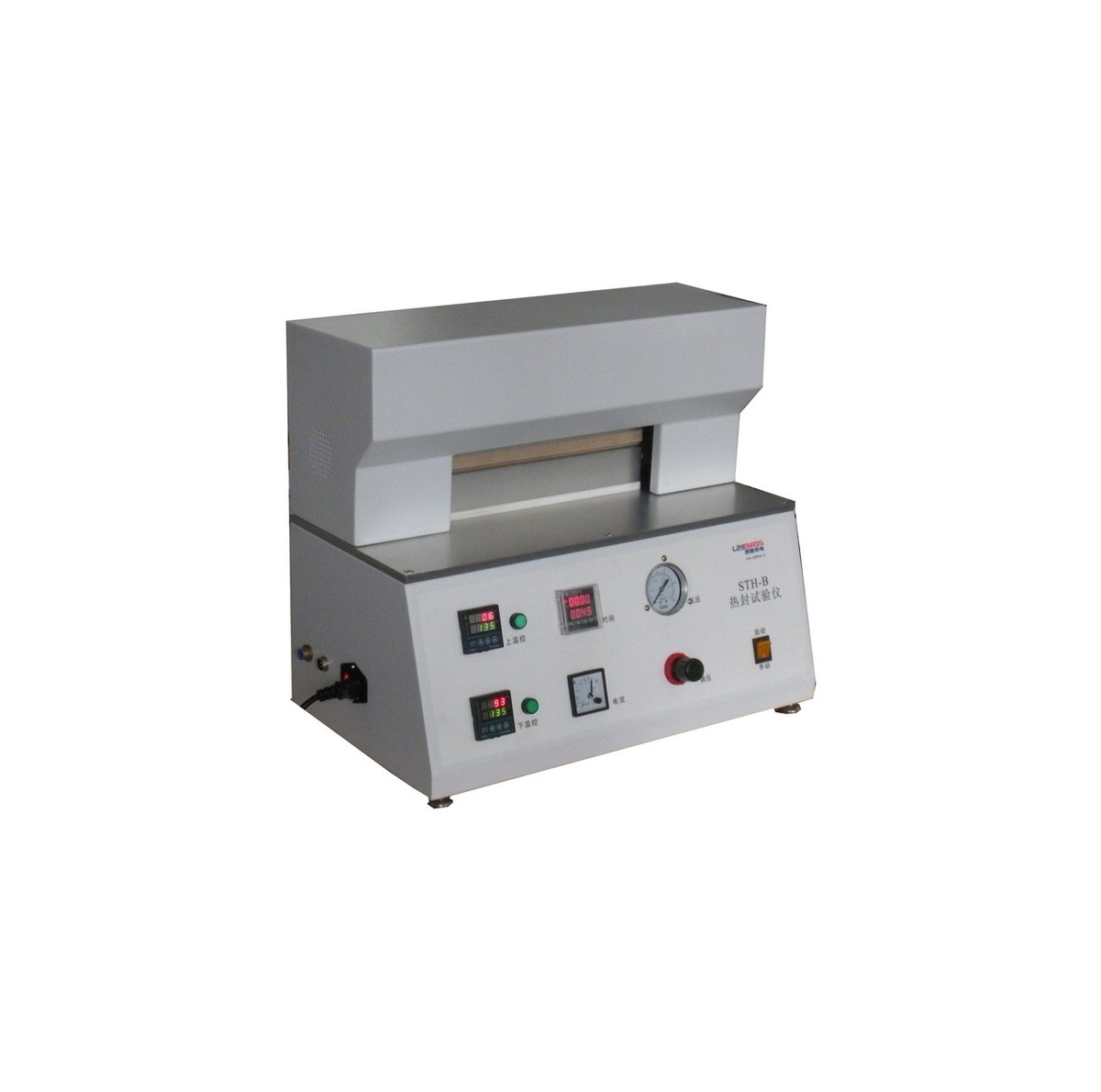
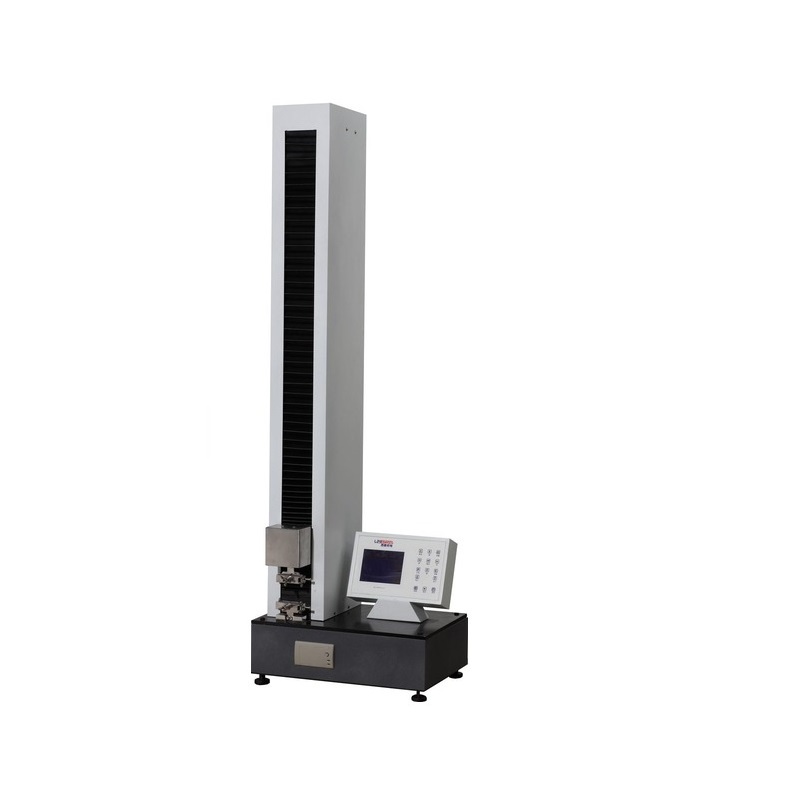
The LabStone STH series heat seal testers (single-point, five-point and intelligent models) prepare gradient seals with controlled temperature, pressure and dwell time, while the STR-A auto tensile tester peels the specimens at 200–300 mm/min and captures the full force–displacement curve. Together they cover ASTM F88, GB/T 8808 and related seal and peel-strength workflows in one laboratory.