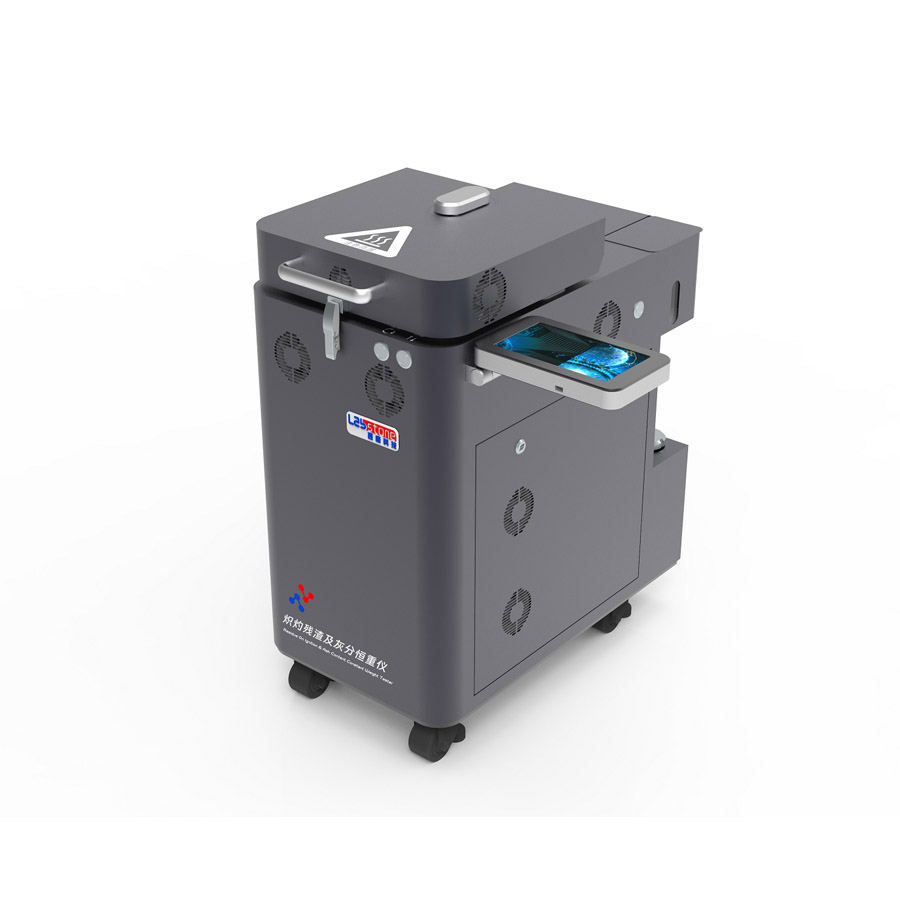
Loss on Ignition is simply how much burned away. You put a sample in a high-temperature furnace, weigh it before and after ignition, and the difference divided by the original mass is the LOI percentage.
Think of wet clay: it loses a little when dried, and loses more when fired, the second loss (volatiles and decomposition beyond water) is the loss on ignition.
Formal definition
LOI is the mass lost by a specimen ignited to constant weight at a specified temperature, expressed as a percentage of the original mass. Common ignition temperatures: 950–1000 °C for refractories, 950 °C for cement, and around 540–1000 °C for resin sand depending on the standard.
Formula
LOI(%) = (m0 - m1) / m0 x 100%, where m0 is the pre-ignition mass and m1 is the constant post-ignition mass. Note that some components may gain mass by oxidation at high temperature and must be corrected per the standard.
Relation to residue on ignition
Both rely on high-temperature ignition plus constant weight. The difference: residue on ignition looks at the ash left behind (inorganic residue), while LOI looks at what burned away (volatiles and decomposition). One reads the remainder, the other the difference, they are complementary.