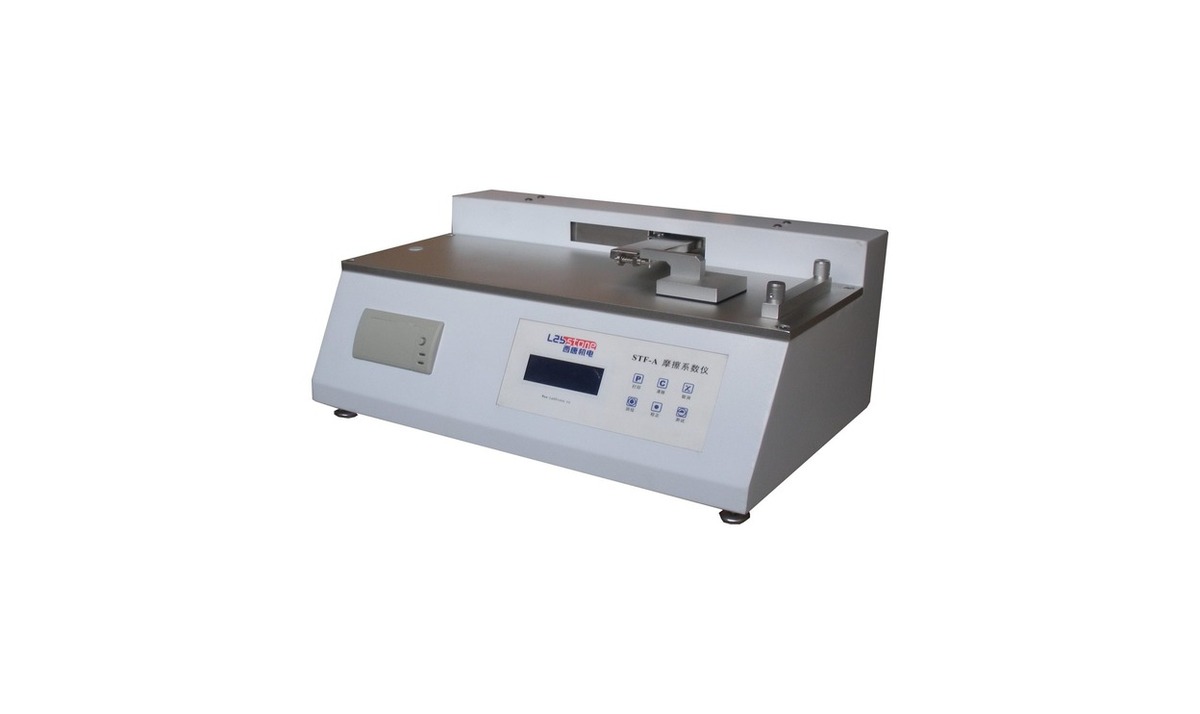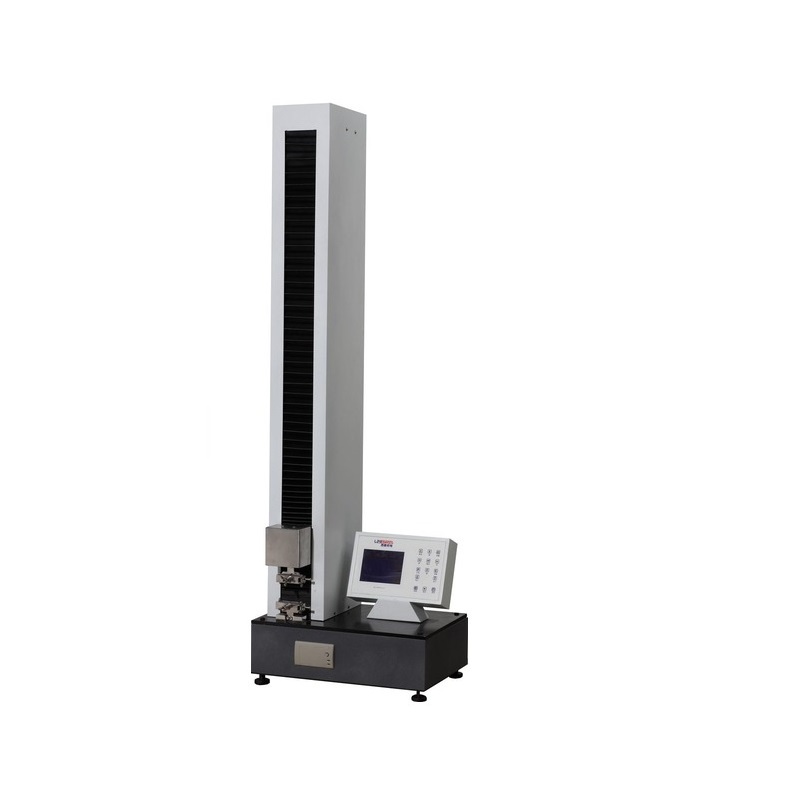
ASTM D1894 measures the static and kinetic coefficients of friction (COF) of plastic film and sheeting by the sled method: a 200 g sled with a 63.5 mm square base (normal force about 1.96 N) is drawn across a horizontal plane at 150±30 mm/min. The initial peak force divided by the normal force gives the static COF; the average force over at least 130 mm of steady sliding gives the kinetic COF. Results are dimensionless and averaged over five valid specimen pairs.
1. Scope and how results are expressed
The method covers plastic film thinner than 0.254 mm and thicker sheeting, for film-to-film, film-to-metal or any surface pair the specification names. Static COF governs whether a form-fill-seal machine can start pulling the web without slip; kinetic COF governs smooth running and whether stacked bags stay put. Friction belongs to a pair of surfaces at a given load and speed, so the tested combination and test direction (MD/TD) must match the end use and be recorded.
2. Specimens and apparatus
The plane specimen is 250 mm × 130 mm; the specimen attached to the sled is 120 mm square for film, or 63.5 mm square for stiffer sheeting, held on the resilient-faced sled with double-sided tape. The force-measuring system must be accurate to ±5%. Friction forces are usually below 2 N, so an oversized load cell can miss the sharp static peak. Each specimen pair slides once only; a used pairing is never re-tested.
3. Conditioning and procedure
Condition specimens at 23±2 °C and 50±5% RH for at least 40 hours per ASTM D618. Place the sled gently, start immediately, and pull at 150±30 mm/min, recording the initial peak (static) and the average force over at least 130 mm of uniform travel (kinetic). When stick-slip is severe, use a rigid link for a separate kinetic run, measure static friction in its own test, and note the linkage used in the report.
4. Why results drift from day to day
Slip additives such as erucamide and oleamide migrate to the film surface over the days after extrusion, building a lubricating layer that lowers COF, so film age must always be recorded. Corona-treated faces read higher, and temperature, humidity and winding tension also shift results. Report three significant figures with a two-figure standard deviation, and commission machinery on measured values, never on datasheet numbers.
5. Key differences from ISO 8295
ISO 8295 specifies a 200±2 g felt-covered 63 mm sled, a speed of 100±10 mm/min, a 15-second contact dwell and at least three specimen pairs. Speed, sled facing, dwell and replicate count all differ, so the two standards are not equivalent and their results cannot be compared directly. Export orders should be tested to the standard the customer's specification cites, and internal comparisons must always use one standard and one surface pairing.