
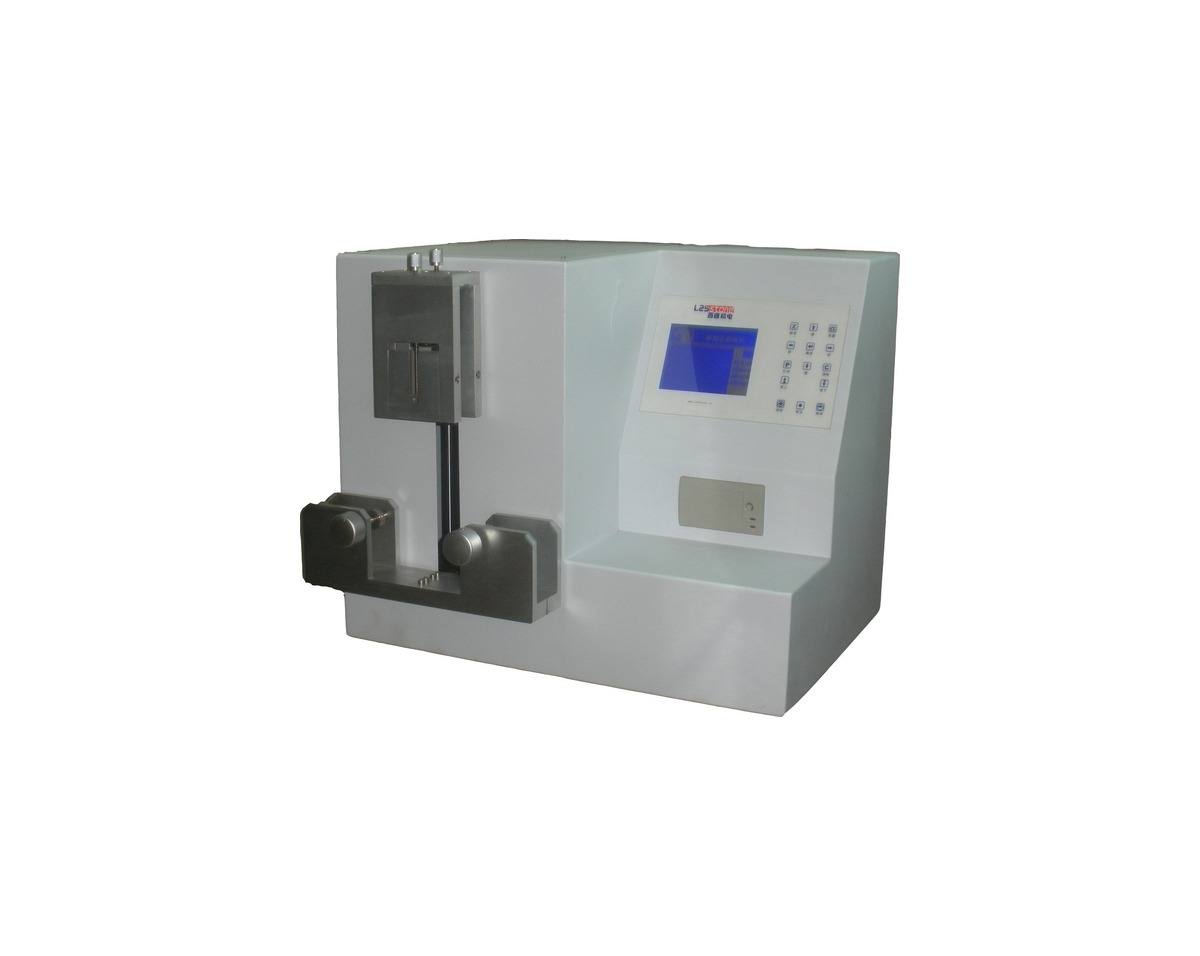
Knife Sharpness Tester
Turns subjective sharpness into quantifiable cutting depth and cutting force for process control and release inspection in knife manufacturing.
DiscontinuedProduction can be restarted for orders of 5 units or more.
Purpose | What it does for you
Quantitatively evaluates the sharpness of household knives (kitchen knives, paring knives, utility knives, razor blades). Traditionally sharpness is judged by an experienced worker making a trial cut — subjective, unteachable and untraceable. This instrument cuts a standard medium under a specified load and stroke, outputting cutting depth or cutting force, so sharpness becomes a quantified metric with settable tolerances suitable for statistical process control.
Key Features
- Quantitative sharpness evaluation replacing subjective hand-feel judgement
- Standard cutting medium with specified load/stroke makes results comparable
- Digital display and automatic judgement reduce human error
- Data storage and statistics support SPC process control
- Compact and easy to operate, suitable for workshop floor use
Operating Principle
A standard cutting medium (such as test line of specified thickness, silicone or card) is fixed in the fixture and the blade cuts into it vertically under a specified load and stroke. Sharpness is evaluated from the penetration depth or the peak force during cutting. Using the same medium and parameters within a batch makes results comparable and suitable for statistical process control.
Technical Specifications
| Measurement Range | by model and medium |
|---|---|
| Accuracy | ±1% of reading |
| Cutting Medium | standard medium (line/silicone/card) |
| Test Load | per method |
| Power Supply | AC 220/110 V ±10%,50/60 Hz |
Note: Due to continuous product iteration and varying application conditions, the technical parameters on this page are typical reference values and are not to be used as acceptance criteria. For tender and customized projects, the product model, configuration and specifications are subject to the mutually confirmed technical agreement and the actual delivered product. For parameter matching tailored to your specific project, please contact us.
Standard Configuration
Main unit, standard cutting medium, fixture, manual and factory calibration certificate. Final scope per the configuration list.
Application Scenarios
- Release sharpness inspection of kitchen, paring and utility knives
- Verification before and after improving the grinding process
- Sharpness decay evaluation after durability/wear testing
- Comparative knife quality testing by inspection bodies and third-party labs
Compliance Standards
Industries Served
- Daily Knives & Hardware
- Third-Party & Government Testing Institutes
- Material R&D, Universities & Institutes
- Packaging & Printing
Frequently Asked Questions
Is sharpness expressed as cutting depth or cutting force?
Either, depending on your focus: cutting depth maps more directly to the intuitive does-it-cut experience, while cutting force is better suited to statistical process control. We configure the output metric and judgement rules to your criteria.
What are initial sharpness and sharpness retention?
Initial sharpness is how a fresh edge performs on its first cut into the standard medium — the greater the cutting depth, the sharper the edge. Sharpness retention (edge life) is the decay curve after a specified number of reciprocating cuts, reflecting how long the edge lasts. Knife release inspection normally needs both: the first judges grinding quality, the second whether material and heat treatment are stable.
Why must the test medium be standardised in sharpness testing?
Knives are tested against standard abrasive paper, wire, silicone or card; medical blades and needles against a standard penetration or cutting medium. The batch, condition and hardness of that medium change cutting and penetration forces directly, so only a common medium makes data comparable across batches and factories. Replace the medium at the interval the method specifies and log its batch number, otherwise trend analysis becomes meaningless.
Can surgical blades and injection needles be tested on one instrument?
Yes. The STX-601 Medical Knife & Needle Sharpness Tester covers both surgical blades and injection needles, switching between them with the fixture and the standard penetration or cutting medium, and outputs penetration and cutting force data. Everyday knives (kitchen, utility and similar) use the STX-501, STX-502 and STX-602 series. When selecting, confirm the sample type and the standard you work to first, then match the fixture and force range.
How is sharpness data used for production process control?
Once sharpness becomes a number instead of a feeling, you can set release limits, track the stability of grinding and heat-treatment steps, and compare edge life between batches. Keep the medium and cutting parameters fixed, sample the same batch, and follow the trend with a control chart rather than judging a single result — one reading describes one blade, the trend describes the process.
Does LabStone support OEM/ODM and customised instruments?
Yes. Standard models ship as-is, while chamber count, specimen size, fixtures, temperature range and software modules (including the GMP Computerized System module) can be tailored to your SOP and URS. IQ/OQ/PQ validation documentation packages are available.
What is the typical lead time, and how is shipping handled?
Standard models usually ship in 4–8 weeks; customised builds depend on the agreed scope. Instruments are packed in export wooden cases and can move by sea, air or rail. We supply proforma invoice, packing list and certificate of origin (CO / Form E), and work under EXW, FOB, CIF or DAP terms.
How are installation, training and calibration handled after delivery?
We provide remote installation guidance, bilingual (Chinese/English) manuals and video training; on-site commissioning by our engineers is available. Users can self-calibrate with standard weights, reference films or calibrated leak standards, and third-party calibration certificates can be supplied.
What is the warranty, and how are spare parts supplied?
The instrument carries a 12-month warranty from acceptance plus lifetime maintenance support. Consumables (molecular sieve, desiccant, sealing grease, printer paper) are kept in long-term stock, and key components are international brands available worldwide. We respond to technical enquiries within 24 hours.
Do the instruments comply with ASTM, ISO and pharmacopoeia standards?
Yes. Every instrument lists its applicable standards on the specification page (ASTM, ISO, GB, YBB, Chinese Pharmacopoeia, USP, EP, JIS, DIN, TAPPI and more). The software outputs raw records and reports suitable for audit trails, with an optional GMP / FDA 21 CFR Part 11 compliance module.
Which languages does the software support, and can it integrate with a LIMS?
The software ships with Chinese and English interfaces; other languages can be added on request. Data export is available over RS232, USB, Ethernet or Wi-Fi, and reports can be exported to Excel, PDF or structured files for LIMS integration.