Water Vapor Transmission Rate Tester – Gravimetric (Water Method)
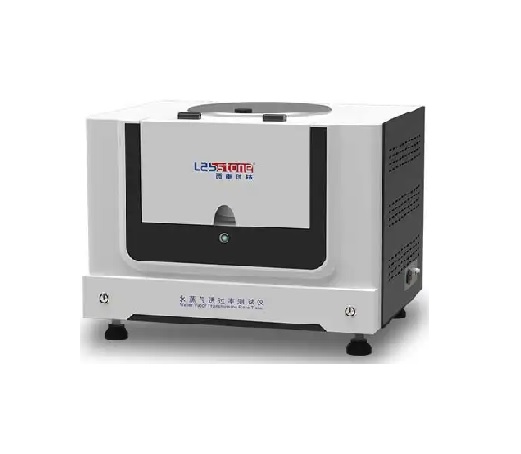
Gravimetric WVTR dedicated to the water method, with TEC semiconductor temperature control and automatic dry-air humidity control — runs in an ordinary indoor environment, 3–12 stations.
Purpose | What it does for you
Measures WVTR and permeability of films, sheets, containers and building materials made of plastic, textile, leather or metal, for labs that use the water method (upright/inverted cup filled with water). Compared with the W-B series, the STW-8 is more compact and cost-effective — a fit for medium-throughput routine testing and teaching laboratories.
Key Features
- Strict compliance with Chinese, US and ISO standards
- Test error decays toward zero with time and the maximum error can be estimated
- TEC module temperature control plus automatic dry-air humidity, uniform double-plane spiral airflow
- Air dryer regenerates the desiccant automatically; replacement interval about 6 months
- No mechanical knobs; one-key test with automatic termination, data saving and power-on self-diagnosis
- Runs in an ordinary indoor environment (no climate-controlled room); results independent of ambient conditions
- Graphical full-process monitoring, multi-format reports and GMP Computerized System data compliance
Operating Principle
Water method: the cup is filled with water, sealed with the specimen and placed in the chamber. Temperature, relative humidity and airspeed are held at setpoints; the vapour pressure difference drives water vapour through the specimen, reducing the cup mass. The instrument weighs the cups automatically at set intervals and derives WVTR and related parameters from the mass curve. Both upright and inverted cup modes are supported.
Technical Specifications
| Measurement Range | Film 0.05–10,000 g/m²·24h; container 0.0002–30 g/pkg·24h |
|---|---|
| Measurement Error | Film 0.05 g/m²·24h; container 0.0002 g/pkg·24h |
| Balance Range | 220 g |
| Balance Resolution | 0.1 mg |
| Temperature Range | 15–45 ℃ |
| Temperature Error | ±0.3 ℃ |
| Humidity Range | 5%–50% RH |
| Humidity Error | ±2% RH |
| Test Area | 33 cm² (customisable) |
| Specimen Thickness | <3 mm |
| Compressed Air Pressure | >0.3 MPa |
| Power Supply | AC 220/110 V ±10%,50/60 Hz |
| Power | <2 kW |
Note: Due to continuous product iteration and varying application conditions, the technical parameters on this page are typical reference values and are not to be used as acceptance criteria. For tender and customized projects, the product model, configuration and specifications are subject to the mutually confirmed technical agreement and the actual delivered product. For parameter matching tailored to your specific project, please contact us.
Models & Configuration
| Model | STW-8-030-G | STW-8-040-G | STW-8-060-G | STW-8-080-G | STW-8-120-G |
|---|---|---|---|---|---|
| Specimen Count | 3 | 4 | 6 | 8 | 12 |
| Dimensions | 873×700×688 mm | 873×700×688 mm | 898×727×677 mm | 898×727×677 mm | 898×727×677 mm |
| Net Weight | 70 kg | 79 kg | 98 kg | 98 kg | 98 kg |
Standard Configuration
Main unit, computer, air dryer, professional software, test cups, 200 g calibration weight, specimen sampler. Optional: GMP software module, asphalt-seal cups.
Application Scenarios
- Routine incoming inspection of food and pharmaceutical packaging films
- Teaching labs in materials science and packaging engineering
- Moisture permeability assessment of textiles and leather
- Water vapour transmission of building waterproofing and insulation materials (GB/T 17146)
Compliance Standards
Industries Served
- Packaging & Printing
- Food & Condiments
- Pharmaceutical & Biopharmaceutical
- Textile & Leather
- Building Materials & Construction
- Material R&D, Universities & Institutes
- Third-Party & Government Testing Institutes
Frequently Asked Questions
What is the difference between the STW-8 and W-B series?
The W-B series supports both water and desiccant methods with a wider humidity range (10–90% RH) and a higher level of automation; the STW-8 focuses on the water method with 5–50% RH, a compact build and better value. If your method uses only the water method and budget matters, the STW-8 is the better fit.
Can the test area be customised, and how are finished containers tested?
The standard test area is 33 cm², with other areas available on request. Finished containers (bottles, pouches, boxes) need no sample preparation — container mode measures the whole pack, 0.0002–30 g/pkg·24h at 0.0002 g/pkg·24h resolution, which covers the decision range for high-barrier packaging. Maximum sample thickness is 3 mm.
What does the 0.1 mg balance resolution mean for measurement capability?
The water method measures permeation by weight, so balance resolution sets the lowest measurable transmission rate. At 0.1 mg resolution with a 33 cm² test area, the film range reaches 0.05 g/m²·24h and the container range 0.0002 g/pkg·24h. For higher-barrier structures (foil laminates, oxide-coated films), consider cross-checking with an infrared-method instrument — gravimetric cycle time grows sharply on very high-barrier materials.
How do I choose between the gravimetric cup, electrolytic and infrared WVTR methods?
Choose by range and purpose. The gravimetric cup method is closest to the pharmacopoeia and ASTM E96 classic: a wide range, finished containers can be measured directly, but each run is long — best for compliance comparison and referee testing. The electrolytic method is an absolute coulometric method suited to low-transmission films and containers. The infrared (TDLAS) method responds fast and suits trace water vapour in high-barrier materials and high-throughput work. Pick the cup method when compliance leads, electrolytic or infrared when line efficiency leads.
What is the difference between differential-pressure and equal-pressure (coulometric) gas transmission testing?
The differential-pressure method creates a pressure difference across the specimen and tracks the pressure rise on the low-pressure side; one instrument measures oxygen, carbon dioxide, nitrogen and other non-toxic gases, making it the general-purpose choice. The equal-pressure method keeps both sides at the same pressure and uses a coulometric sensor for oxygen only, giving higher sensitivity for the extremely low OTR of high-barrier materials. Two rules: choose differential pressure when you need several gases, coulometric when you measure oxygen only and need the lowest detection limit.
Why does high-barrier gas transmission testing take so long?
Because the transmitted amount is extremely small, you must wait until permeation reaches steady state and the accumulated signal exceeds the instrument resolution; temperature and humidity equilibration and the system background (residual oxygen or water vapour) also take time. Practical ways to shorten it: raise the test temperature and note it in the report, reduce background and leaks, use a more sensitive sensor, and add parallel test chambers. No speed-up should compromise the steady-state criterion.
How much do temperature and humidity conditions affect barrier results?
The effect is significant: conditions must match the method standard and be stated in the report. Higher temperature raises transmission; for hydrophilic materials, a change in relative humidity markedly changes both water vapour and oxygen transmission. This instrument controls 15–45 °C to ±0.3 °C and covers 35%–90% RH (some models also offer 0% RH). Before comparing data between laboratories, check that both used the same temperature and humidity.
Does LabStone support OEM/ODM and customised instruments?
Yes. Standard models ship as-is, while chamber count, specimen size, fixtures, temperature range and software modules (including the GMP Computerized System module) can be tailored to your SOP and URS. IQ/OQ/PQ validation documentation packages are available.
What is the typical lead time, and how is shipping handled?
Standard models usually ship in 4–8 weeks; customised builds depend on the agreed scope. Instruments are packed in export wooden cases and can move by sea, air or rail. We supply proforma invoice, packing list and certificate of origin (CO / Form E), and work under EXW, FOB, CIF or DAP terms.
How are installation, training and calibration handled after delivery?
We provide remote installation guidance, bilingual (Chinese/English) manuals and video training; on-site commissioning by our engineers is available. Users can self-calibrate with standard weights, reference films or calibrated leak standards, and third-party calibration certificates can be supplied.
What is the warranty, and how are spare parts supplied?
The instrument carries a 12-month warranty from acceptance plus lifetime maintenance support. Consumables (molecular sieve, desiccant, sealing grease, printer paper) are kept in long-term stock, and key components are international brands available worldwide. We respond to technical enquiries within 24 hours.
Do the instruments comply with ASTM, ISO and pharmacopoeia standards?
Yes. Every instrument lists its applicable standards on the specification page (ASTM, ISO, GB, YBB, Chinese Pharmacopoeia, USP, EP, JIS, DIN, TAPPI and more). The software outputs raw records and reports suitable for audit trails, with an optional GMP / FDA 21 CFR Part 11 compliance module.
Which languages does the software support, and can it integrate with a LIMS?
The software ships with Chinese and English interfaces; other languages can be added on request. Data export is available over RS232, USB, Ethernet or Wi-Fi, and reports can be exported to Excel, PDF or structured files for LIMS integration.