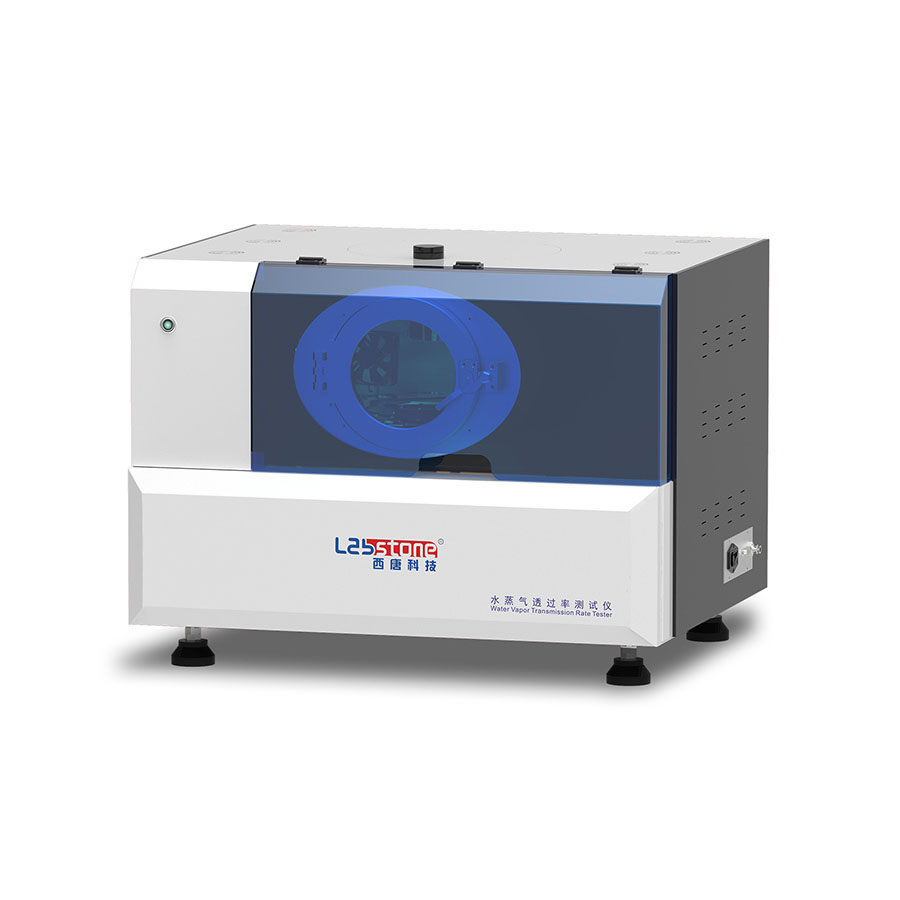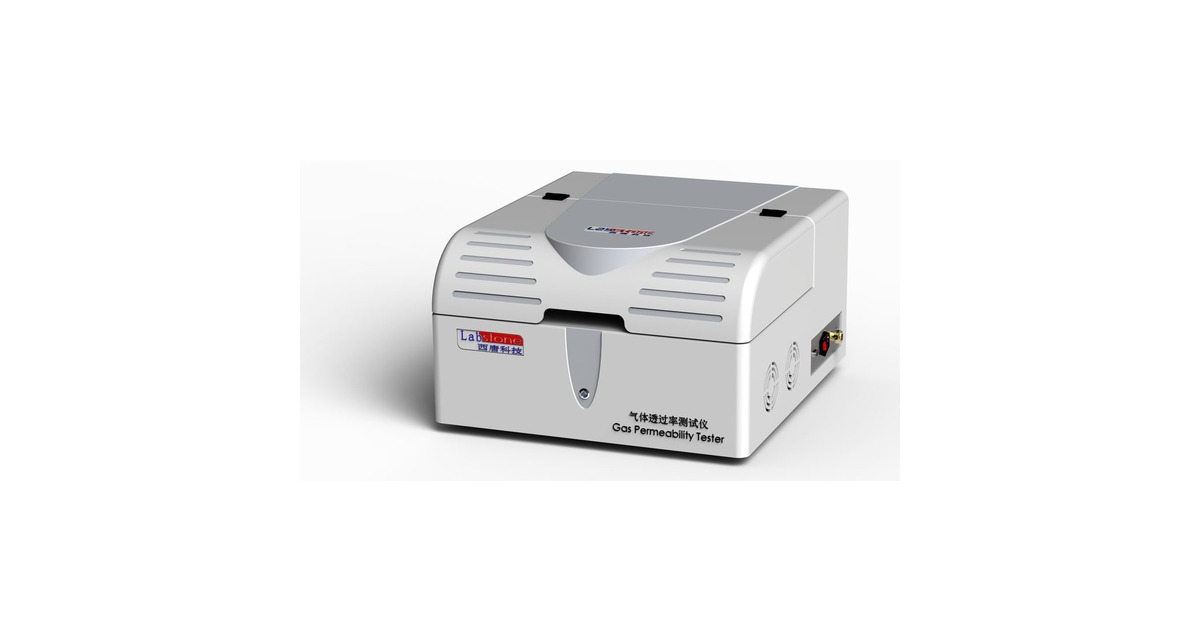
Pharmaceutical packaging films are barrier-tested with two complementary workflows. Water vapour transmission is measured by gravimetric cup, electrolytic and infrared-detector methods, typically at 23 °C ± 0.5 °C and 90 % ± 2 % RH, and high-barrier composite hard sheets are expected to stay within 2.5 g/(m²·24h). Gas transmission is measured mainly by the differential-pressure method at 23 °C ± 2 °C and 50 % ± 5 % RH across a 0.1 MPa pressure difference, with oxygen transmission of high-barrier sheets limited to 30 cm³/(m²·24h·0.1 MPa).
1. Why pharmaceutical packaging must be barrier-tested
Solid dosage forms are moisture-sensitive: tablets soften and hydrolyse, and capsule shells turn brittle whether they gain or lose water. Liquid preparations and actives are oxygen-sensitive: ingress oxidises and degrades the API. Water vapour transmission rate (WVTR) and gas transmission rate (GTR) are therefore mandatory registration and batch-release tests for plastic pharmaceutical packaging such as PVC/PVDC blister hard sheets, and the data directly determine shelf life.
2. Drug packaging material standards: two pillar method standards
China’s national standards for drug packaging materials were consolidated in 2015, when the national drug regulator published 130 packaging material standards effective 1 December 2015. Within this system, the water vapour transmission method standard and the gas transmission method standard define how WVTR and GTR are measured, and they are the two most widely cited method standards in the registration testing and routine batch control of pharmaceutical films, sheets and composite hard sheets.
3. Water vapour transmission: one standard, several methods
The WVTR method standard combines several techniques: the gravimetric cup method, the electrolytic analysis method and the infrared detector method, which serves as the arbitration method. Selection follows the expected transmission level: films transmitting roughly 2 g/(m²·24h) or more suit the cup method, while mid- and low-transmission high-barrier materials are handled faster and more sensitively by the electrolytic or infrared methods, and disputed results are settled with the infrared detector method.
| Method | Principle | Best suited for |
|---|---|---|
| Gravimetric cup method | Moisture gain of a desiccant, weighed on a balance | Films and sheets transmitting roughly ≥2 g/(m²·24h) |
| Electrolytic method | Vapour is electrolysed to hydrogen and oxygen at electrodes; the current gives the transmission rate | Mid/low transmission films |
| Infrared detector method (arbitration) | Vapour is carried by a gas stream to an infrared detector | All films, sheets and packages; reference for disputes |
4. Cup method in practice
In the cup method the specimen seals a test dish containing anhydrous calcium chloride. Before use the desiccant is oven-dried at 200 °C ± 2 °C for 2 hours and graded 0.60–2.36 mm; the dish must expose at least 25 cm² of specimen area, and the balance should read to 0.1 mg.
The dish goes into a humidity cabinet; the first weighing follows 16 hours of exposure and 30 minutes of desiccator equilibration, and subsequent weighings are taken every 24, 48 or 96 hours. The test ends when the mass gains of two successive weighings differ by no more than 5 %. Sealing wax must not change by more than 1 mg in 24 hours at 38 °C and 90 % RH.
5. Electrolytic analysis and the infrared detector method
In the electrolytic method, vapour passing the specimen is electrolysed into hydrogen and oxygen at the electrodes, and the electrolysis current is proportional to the transmission rate; stability is reached when three successive current readings fluctuate by no more than 5 %. In the infrared method, vapour permeates from the high-humidity cell through the specimen into the low-humidity cell and is carried by a gas stream to an infrared detector, whose steady-state signal gives the WVTR.
6. Conditions, limits and result evaluation
For composite hard sheets the reference condition is 23 °C ± 0.5 °C and 90 % ± 2 % RH; the electrolytic and infrared methods also allow a 38 °C ± 0.5 °C, 90 % ± 2 % RH condition. Results are reported as the arithmetic mean of three specimens, each single value within ±10 % of the mean, and high-barrier composite hard sheets are typically specified at no more than 2.5 g/(m²·24h) WVTR.
7. Gas transmission: differential pressure and coulometric methods
The gas transmission standard relies primarily on the differential-pressure method: the specimen separates a low-pressure cell from a high-pressure cell charged with about 0.1 MPa of test gas, the low-pressure side is evacuated to near zero, and GTR follows from the pressure rise. A second, coulometric method is dedicated to oxygen. Conditions are 23 °C ± 2 °C and 50 % ± 5 % RH across a 0.1 MPa difference.
For high-barrier composite hard sheets the oxygen transmission limit is 30 cm³/(m²·24h·0.1 MPa). Methodologically, the differential-pressure technique shares its principle with ISO 2556 and ASTM D1434, while the coulometric method corresponds to the equal-pressure coulometric detection of ASTM D3985, the mainstream approach for oxygen transmission rate (OTR) testing. PVDC-based sheets owe their registration value to an OTR far below that of plain PVC.
8. Instrument selection: one tester per method
A laboratory set up against these method standards selects one instrument per technique: a gravimetric (cup) WVTR tester for the cup method, an electrolytic WVTR tester for electrolytic analysis, an infrared WVTR tester for the arbitration method, a differential-pressure gas transmission tester for GTR, and optionally a coulometric oxygen transmission tester for OTR-specific work. Together they cover every method in both standards.
9. Practical points and common pitfalls
Use three specimens, conditioned for 4 hours at 23 °C ± 2 °C and 50 % ± 10 % RH, free of wrinkles, pinholes and scratches. Cup tests run for days on high-barrier materials, while the electrolytic and infrared methods return results in hours — the practical choice for low-transmission films.
The same film can give different numbers in different methods because the cup method weighs desiccant gain while the electrolytic and infrared methods measure vapour carried in a gas stream; the gap widens near the instrument floor. Fix the method and condition in the registration dossier, and settle disputes with the infrared detector method.
References
- National standard for the determination of water vapour transmission of pharmaceutical packaging materials (drug packaging standards issued 2015, effective 1 December 2015)
- National standard for the determination of gas transmission of pharmaceutical packaging materials (same 2015 series)
- ISO 15106-3, Plastics — Film and sheeting — Determination of water vapour transmission rate — Part 3: Electrolytic detection sensor method
- ASTM F1249, Standard Test Method for Water Vapor Transmission Rate Through Plastic Film and Sheeting Using a Modulated Infrared Sensor
- ASTM D3985, Standard Test Method for Oxygen Gas Transmission Rate Through Plastic Films and Sheeting Using a Coulometric Sensor
- ISO 2556, Plastics — Determination of the gas transmission rate of films and thin sheets under atmospheric pressure (manometric method)