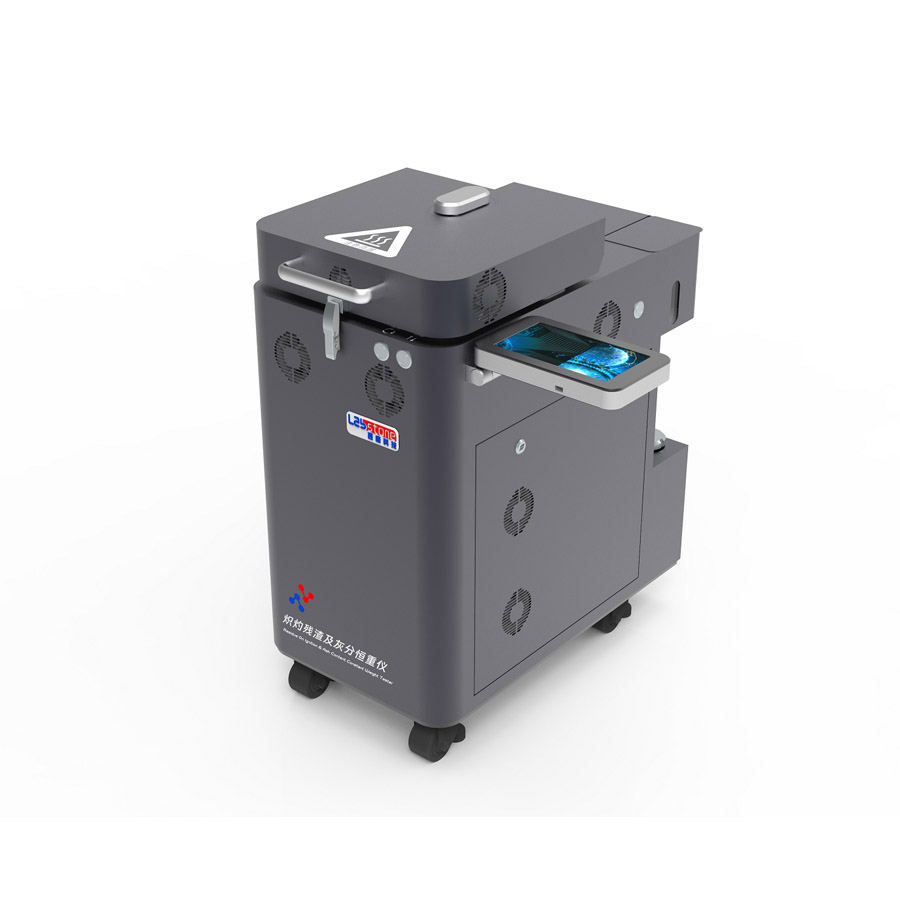
In QC, pharmaceutical and environmental labs, the terms "ash", "ignition residue" and "loss on ignition" are often mixed up. They are indeed all obtained by "burn hot, cool, weigh the residue", but their purpose and arithmetic are opposite. A comparison table makes it clear.
1. Three sentences to tell them apart
- Ash: after organic matter burns off, the mass fraction of the remaining inorganic mineral residue — looks at "how much ash remains".
- Ignition residue: the inorganic matter left after a drug/excipient is ignited at high temperature — looks at "what won't burn away", oriented to pharmaceutical compliance.
- Loss on ignition (LOI): the mass fraction "lost" after high-temperature ignition — looks at "how much burned off", oriented to solid waste / building materials.
2. Comparison table
| Indicator | Typical standard | Temperature | Calculation | Common use |
|---|---|---|---|---|
| Ash | GB/T 9741 etc. | ~500-600 C (or higher) | residue mass / sample mass | chemicals, food, feed |
| Ignition residue | ChP 0841 | 500-600 C | residue mass / sample mass | API, excipients, formulations |
| Loss on ignition | solid-waste / building standards | ~550-950 C | (pre - post ignition) / sample mass | solid waste, soil, building materials |
3. Why all require constant weight
All three rely on a constant-weight end-point where the sample is burned/dried until mass no longer changes; otherwise the residue still traps volatiles or adsorbed water and results drift. The judgement typically uses a 0.3 mg or 0.5 mg difference limit.
4. Benefits of automation
Traditional muffle furnaces rely on manual repeated weighing — time-consuming and fatigue-prone. LabStone's ignition-residue & ash constant-weight tester automates "heat-up — hold — cool — weigh — constant-weight decision", requiring only sample loading, locking judgement consistency at the 0.3 mg criterion, ideal for batch tasks in drug-control institutes, inspection academies and solid-waste testing.