Acid-insoluble ash determination is an important indicator for specific inorganic impurities — silicates, sand and clay — in traditional Chinese medicines, foods and minerals. Compared with total ash, it adds a key acid-treatment step (usually hydrochloric or sulfuric acid). This step makes the sources of error more complex and demands more careful handling.
Common sources of error
Losses during acid treatment. When ash is boiled in hydrochloric acid and filtered, the sample spatters easily; any tiny acid droplets left on the filter paper or crucible wall volatilise at high temperature and cause abnormal mass change.
Corrosion of equipment by acidic fumes. Acid-insoluble ash testing generally involves carbonisation, acid boiling and then high-temperature ignition. Fumes from the acid are highly corrosive to the heating elements of a conventional muffle furnace and to the balance, shortening equipment life and contaminating samples as corrosion products flake off.
Residue left during transfer. If the acid-treated residue is not quantitatively transferred to the crucible, the final result reads low.
Control methods and the automation advantage
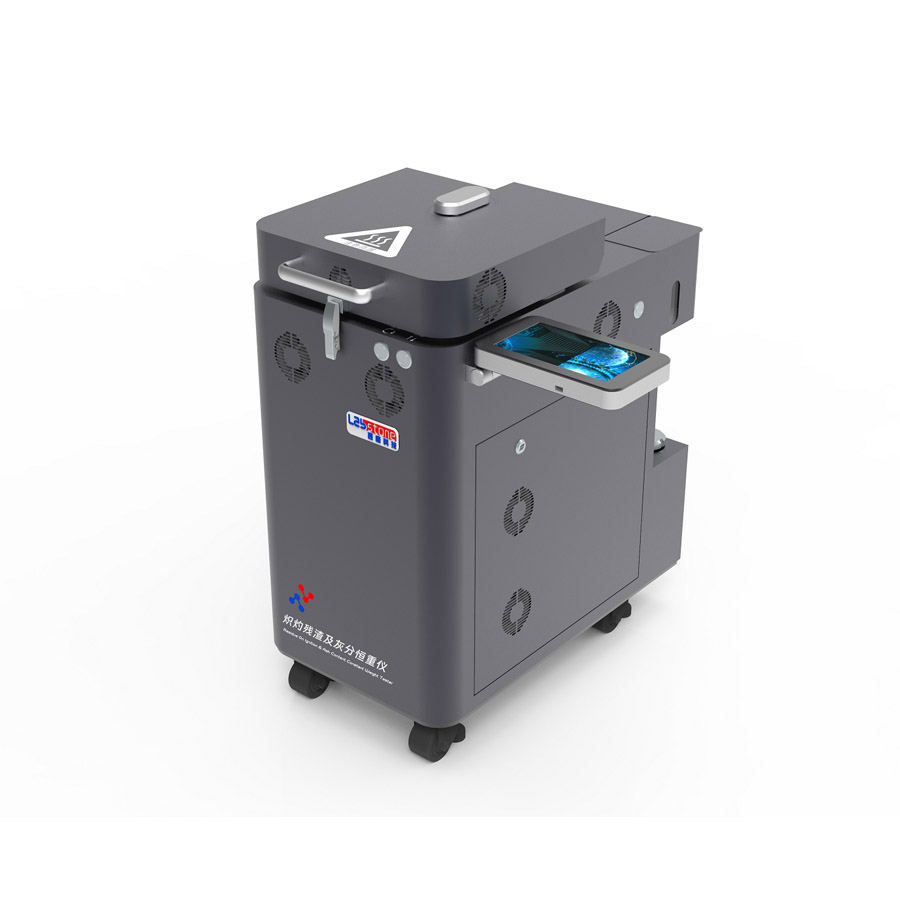
For the peculiarities of acid-insoluble ash testing, an integrated automatic constant-weight system provides hardware protection and automated process control.
Corrosion resistance and ventilation. The chamber is designed for acid/alkali environments, and an optional automatic acid-dosing unit enables reagent addition without manual handling. A corrosion-resistant flame-retardant air curtain and low-pressure alarm protect the balance sensor and other core parts from residual acidic fumes during high-temperature de-acidification and weighing.
Enclosed automatic weighing, less contact. After acid treatment there are multiple drying and weighing steps, and frequent manual contact with acid-contaminated crucibles is a safety risk. A fully enclosed automatic weighing system removes direct human contact and prevents physical loss during transfer.
Precise programmed heating. Before final ignition, the acid must be completely evaporated. Programmed temperature control sets a low-temperature de-acidification stage so volatile components are fully driven off before the ash is fixed, avoiding spatter loss from sudden vaporisation of the acid.
Conclusion
Acid-insoluble ash determination is a complex procedure with many interfering factors. Automated process control, corrosion-resistant hardware and precise temperature-control algorithms avoid the main errors of acid treatment, giving the laboratory a more reliable and safer instrument.