Loss on Drying (LOD) is the mass a sample loses after being dried to constant weight under specified temperature and time, expressed as a percentage. It measures total volatiles – not just water but also organic solvents such as ethanol.
It is like drying a wet towel: weigh it first, dry until the weight stops changing, weigh again. The difference is LOD. It reports everything that can be driven off by heat.
Formal definition
Per ChP general chapter 0831, LOD is the mass lost by a sample dried to constant weight under specified conditions. The loss covers water, water of crystallization, and volatile organic solvents such as ethanol, expressed as a percentage.
Key conditions and formula
A common condition is atmospheric drying at 105 °C for 2–4 h or to constant weight; heat-labile or moisture-retentive samples may be dried under vacuum at 60–80 °C. LOD percent equals (weight before − weight after) ÷ weight before × 100, using a balance readable to 0.1 mg.
Relation to nearby terms
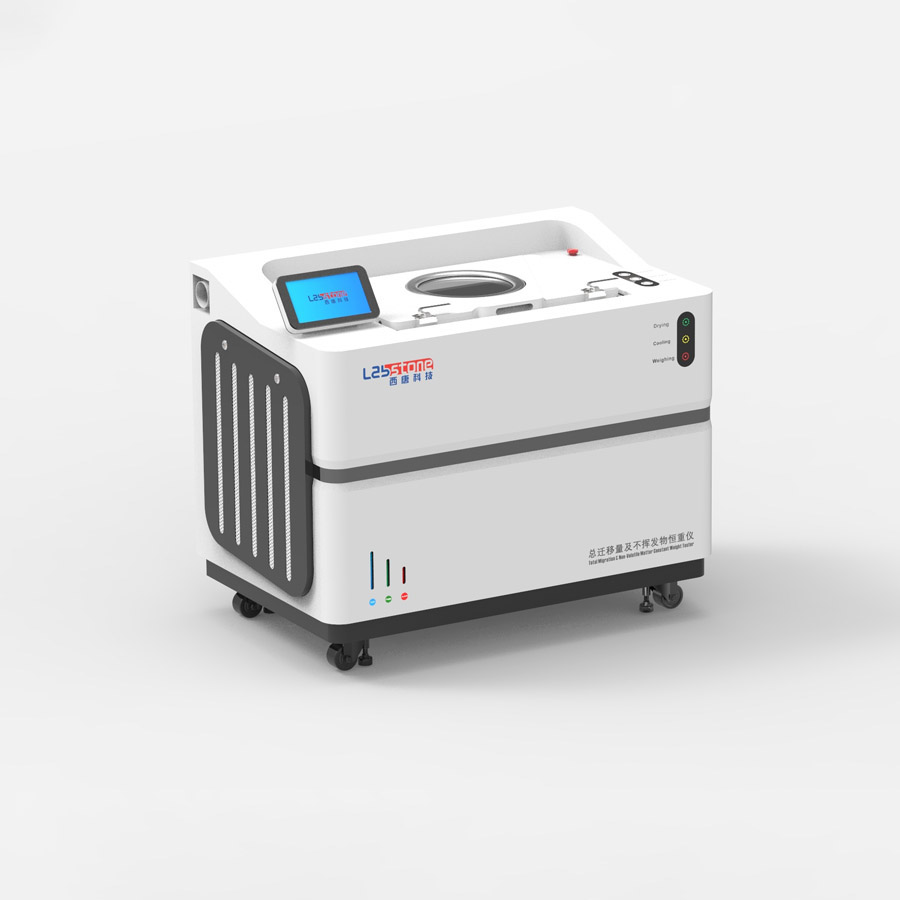
LOD differs from moisture: moisture targets water only, usually by Karl Fischer; LOD covers all volatiles. Both rely on constant weight, the 0.3 mg endpoint, and crucibles, and are the core metrics of a constant-weight analyzer.